Home›Plagiarism vs Copyright Infringement: Key Differences Explained
Plagiarism vs Copyright Infringement: Key Differences Explained
2025-02-15·Plagiarism Detector Team
Defining Plagiarism
Plagiarism is an ethical violation — the act of presenting someone else's words, ideas, or creative work as your own without proper attribution. It is governed by academic honor codes, professional standards, and community expectations rather than by statute. You commit plagiarism whenever you fail to credit the original author, regardless of whether the material is copyrighted.
Plagiarism applies to all forms of intellectual output: written text, spoken ideas, research data, visual designs, musical compositions, and software code. The key element is deception — passing off borrowed work as original. Even paraphrasing without citation constitutes plagiarism because you are claiming someone else's idea as your own, even though you used different words.
Defining Copyright Infringement
Copyright infringement is a legal violation — the unauthorized reproduction, distribution, or display of material that is protected by copyright law. Copyright protection is automatic: the moment an original work is fixed in a tangible medium (written down, recorded, coded), the creator holds exclusive rights to it. Infringement occurs when someone uses that work without the copyright holder's permission.
Copyright law provides specific legal remedies including injunctions, monetary damages, and in some jurisdictions, criminal penalties. Unlike plagiarism, copyright infringement does not depend on whether you credited the original creator. You can properly cite a copyrighted source and still infringe the copyright if you reproduce too much of the work without permission or a valid fair use defense.
Key Differences Between Plagiarism and Copyright
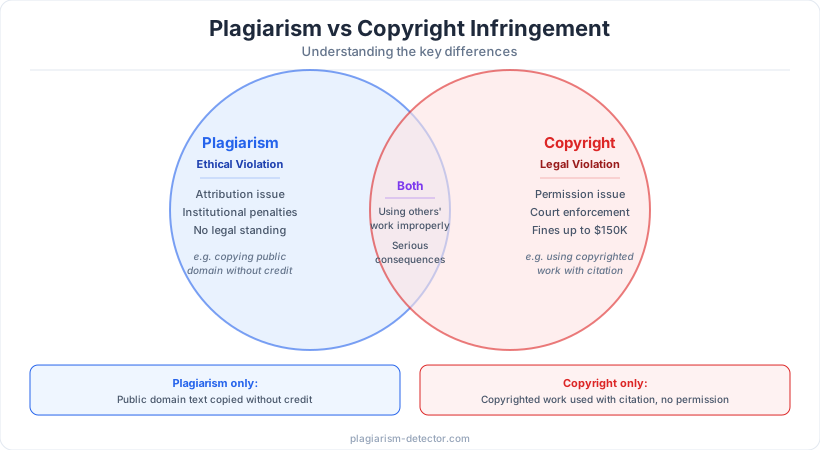
The fundamental difference is the nature of the offense. Plagiarism is about attribution — failing to credit the source. Copyright infringement is about permission — using protected material without authorization. Plagiarism is enforced by institutions (universities, publishers, professional organizations), while copyright is enforced by courts and legal systems.
You can plagiarize public domain works (which have no copyright protection) — for example, copying a passage from Shakespeare without quotation marks is plagiarism but not copyright infringement. Conversely, you can infringe copyright while properly citing the source — reproducing an entire copyrighted article with full attribution still violates the author's exclusive reproduction rights. Understanding this distinction is critical for both academic writers and content creators.
When Plagiarism and Copyright Overlap
In many real-world cases, plagiarism and copyright infringement occur simultaneously. When a student copies a paragraph from a copyrighted journal article without citation, they have both plagiarized (no attribution) and infringed copyright (unauthorized reproduction). The same act triggers both an ethical violation handled by the institution and a potential legal claim by the copyright holder.
The overlap is most common in publishing and professional writing. A journalist who lifts passages from another publication commits both offenses. A business that copies marketing text from a competitor's website commits both offenses. In these cases, the plagiarist may face institutional penalties, reputational damage, and legal action — the consequences compound rather than substitute for each other.
Legal Implications
The legal stakes of copyright infringement can be substantial. In the United States, statutory damages can reach $150,000 per work infringed in cases of willful infringement. The European Union, United Kingdom, and most other jurisdictions provide similar legal frameworks with varying penalties. Even unintentional infringement can result in legal liability, though penalties may be reduced.
Plagiarism, by contrast, does not carry direct legal penalties unless it also constitutes copyright infringement. However, the consequences within institutional contexts can be career-ending: expulsion from academic programs, retraction of published papers, loss of professional licenses, and permanent reputational damage. In some cases, plagiarism in commercial contexts (such as fraudulent ghostwriting) can lead to breach-of-contract lawsuits.
Check Your Text with Plagiarism Detector
Download a free demo or purchase a license to start checking for plagiarism and AI-generated content.
How Plagiarism Detection Helps with Both
Plagiarism detection tools serve as a first line of defense against both plagiarism and copyright infringement. By identifying passages that match existing sources, tools like Plagiarism Detector flag content that may require both proper attribution (to avoid plagiarism) and permission review (to avoid copyright infringement). The Originality Report shows exactly where your text overlaps with published sources.
The reference detection feature helps distinguish properly cited material from uncited matches, addressing the plagiarism side. For copyright concerns, the source links in the report let you identify who owns the original content so you can assess whether your use falls within fair use or requires permission. Running a plagiarism check is not a substitute for legal advice, but it is an essential first step in identifying potential issues before publication.
Frequently Asked Questions
Can I use copyrighted material if I cite the source?
Citing the source prevents plagiarism but does not automatically grant permission to use copyrighted material. You must also comply with copyright law, which typically means limiting your use to short excerpts that qualify as fair use (or fair dealing in some jurisdictions). For substantial reproductions, you need the copyright holder's explicit permission regardless of attribution.
Is plagiarizing public domain content still wrong?
Yes. While public domain works have no copyright protection, presenting them as your own original work is still plagiarism. Copying a passage from a public domain text without quotation marks and attribution violates academic integrity standards. The ethical obligation to credit sources exists independently of legal copyright status.
What is fair use?
Fair use is a legal doctrine (primarily in U.S. law) that permits limited use of copyrighted material without permission for purposes such as criticism, commentary, education, and research. Fair use is determined by four factors: the purpose of use, the nature of the work, the amount used, and the effect on the market for the original. Fair use does not exempt you from the obligation to cite the source.
Can a plagiarism checker detect copyright infringement?
A plagiarism checker identifies text that matches existing sources, which is a strong indicator of potential copyright infringement. However, it cannot make legal determinations about copyright status, fair use, or licensing. It flags the matches; a human must evaluate whether the use is authorized. The source links in Plagiarism Detector's Originality Report help you locate original content owners for permission inquiries.
What should I do if someone plagiarizes my copyrighted work?
If your copyrighted work has been plagiarized, you have both ethical and legal avenues. You can report the plagiarism to the offender's institution or publisher and file a copyright infringement claim. For online content, you can submit a DMCA takedown notice to the hosting provider. Documenting the infringement with timestamped evidence and an originality report strengthens your case.


 Stand with Ukraine!